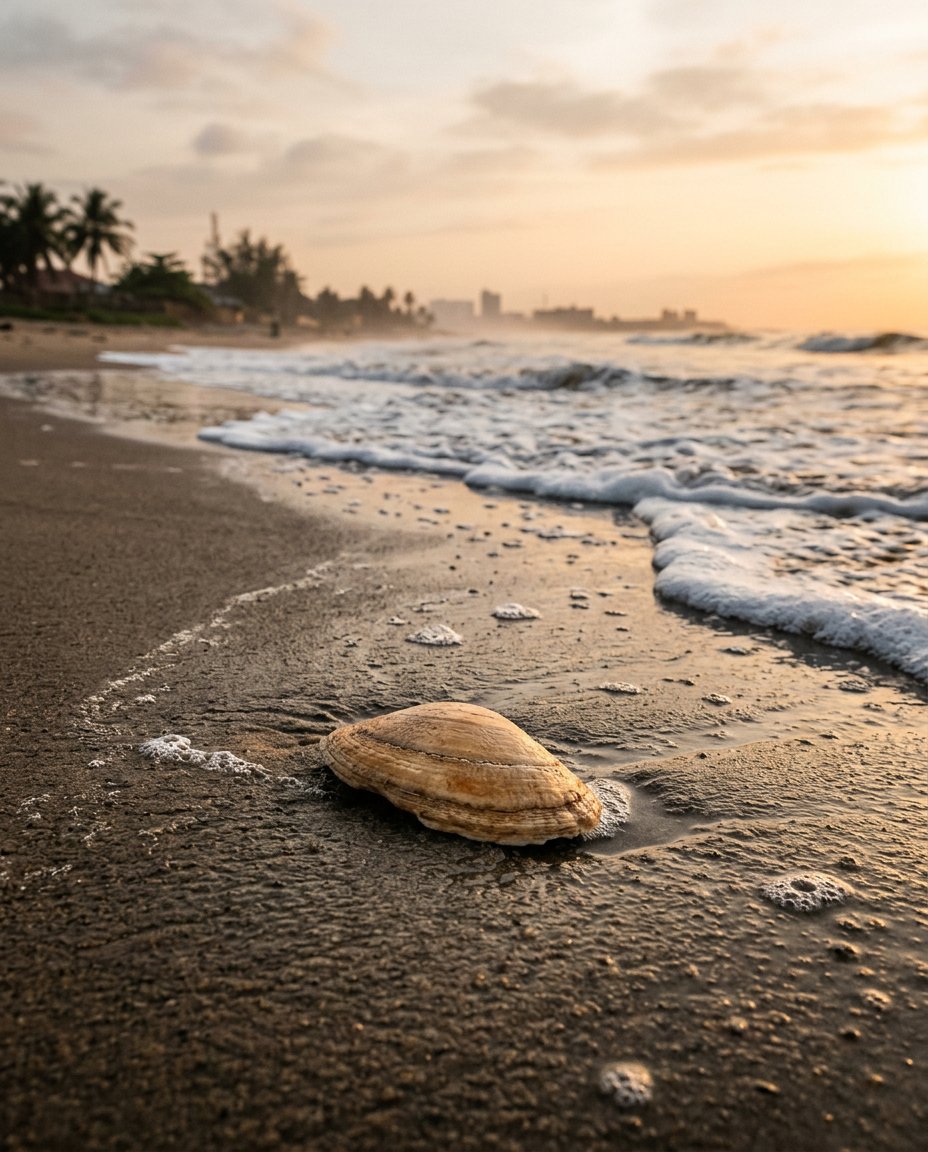
SHELLS
Something
beautiful
happened here.
Every OMI begins with something that was once alive.
Something that grew.
Something that changed.
Something that spent its life in the sea.
And then, somehow, it found its way to us.
A mollusc built this.
Before it became jewellery, it was part of a living animal.
A soft-bodied mollusc built its shell slowly, layer by layer, using minerals from the water and its surroundings.
It did not find the shell.
It made it.
And it carried it throughout its life.
Before OMI, there was the sea.
Water shaped it.
Sand weathered it.
Time changed it.
Every curve, ridge, mark and colour became part of the story.
Then the mollusc was gone.
But the shell remained.
And every shell tells
a different story.
There are hundreds of thousands of mollusc species, from clams and scallops to sea snails and limpets.
They live differently. They grow differently. And they build differently.
Which is why no two shells are quite the same.
Some curve. Some spiral.
The shape follows the life.
Some are smooth. Some are ridged.
The surface carries its environment.
Some are almost perfectly symmetrical. Others are beautifully irregular.
Nature does not make duplicates.
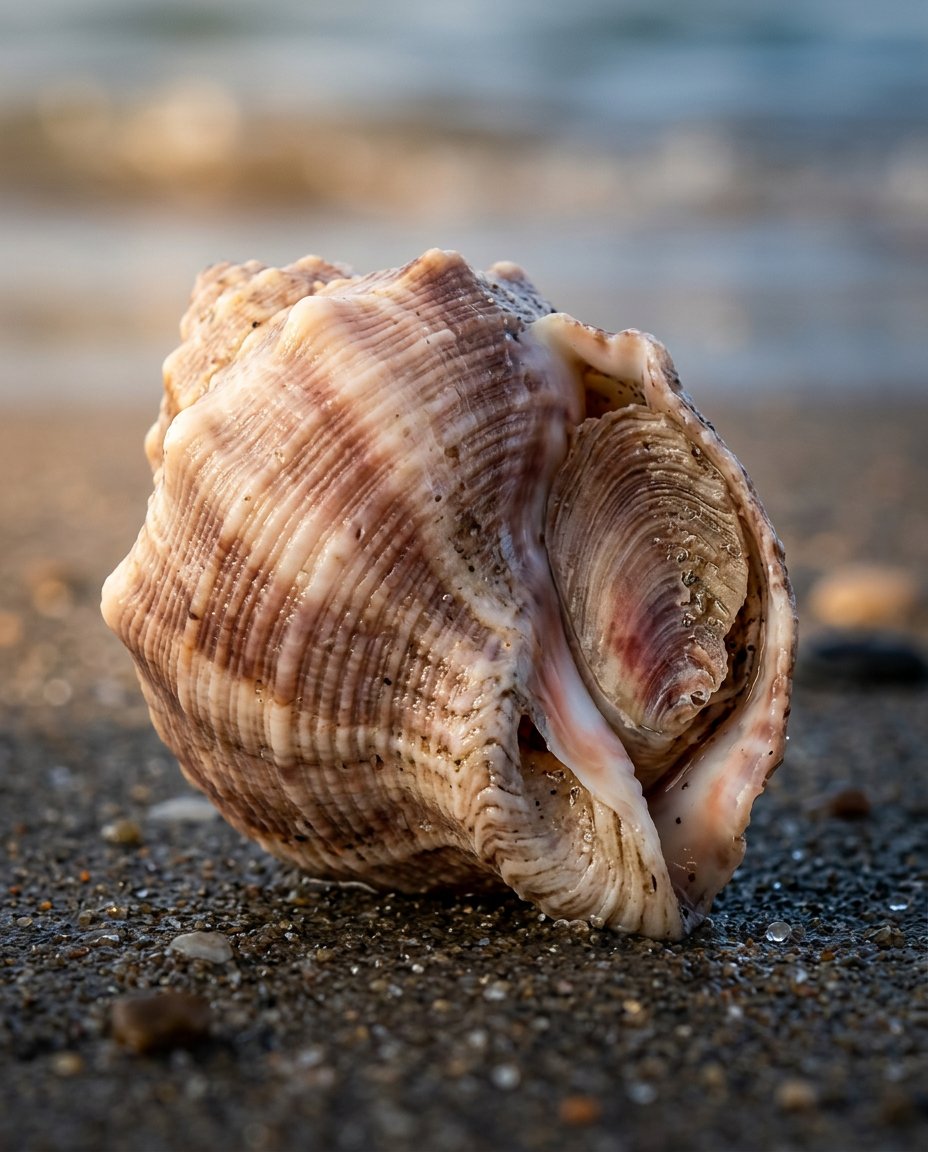
Look closely.
A shell is not just a shape. It is a record of growth.
The lines show where it grew.
The texture carries the marks of its environment.
The colours and patterns come from complex biological processes that scientists are still learning to understand.
Even its shape tells us something about the life that built it.
The more closely you look, the more there is to see.
A shell is built,
not found.
At the heart of this process is the mantle, a layer of living tissue that builds the shell.
It secretes the materials that become the shell, adding new layers as the animal grows.
For spiral shells, the oldest part is near the centre. New growth forms around it.
A lifetime, built one layer at a time.
in motion
And then
life moves on.
When the mollusc is gone, the shell does not simply disappear.
It can wash ashore. Weather in the sun. Return to the seafloor. Become shelter for another creature. Or simply rest on the shore, waiting to be found.
We work with naturally empty shells.
We do not remove living molluscs from their shells.
Because the beauty we found does not need to come at the expense of the life that created it.
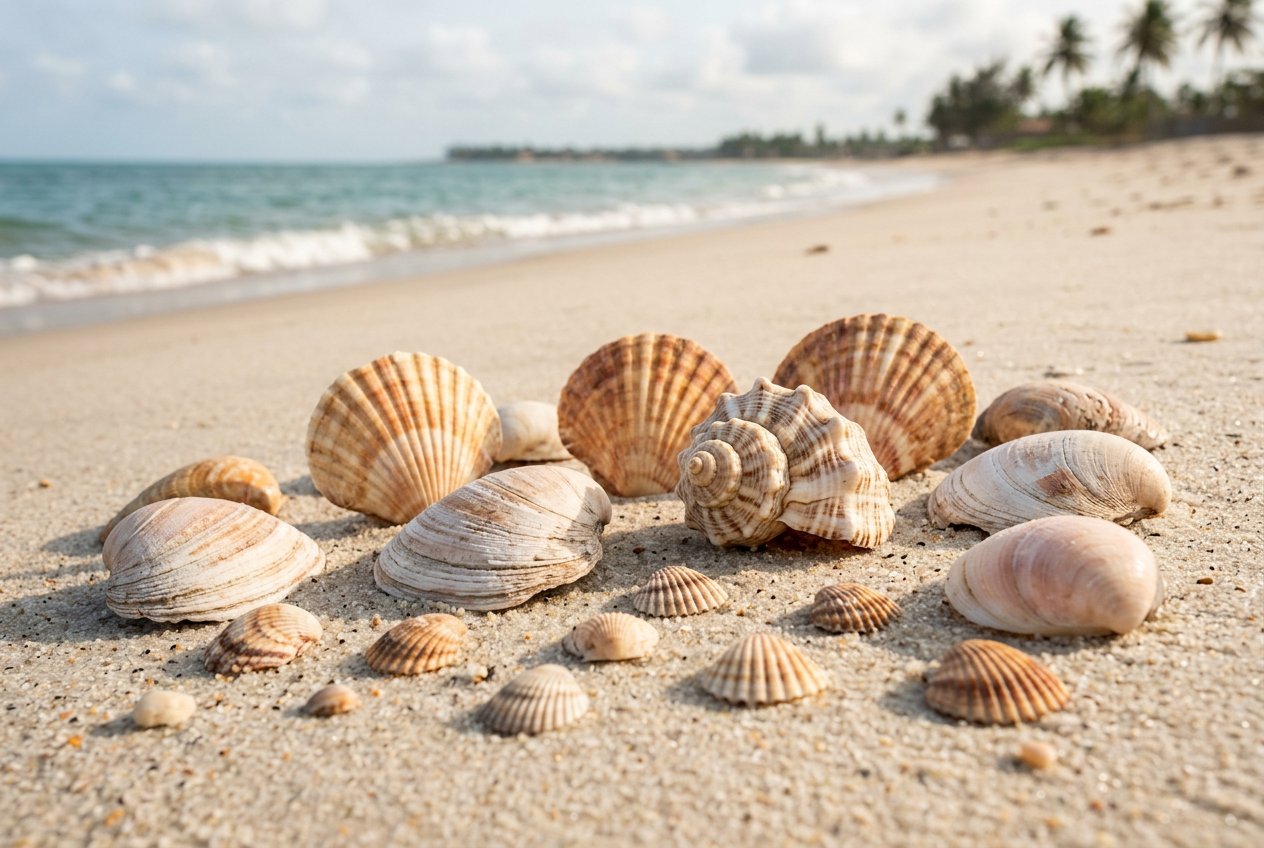
Then we found
them here.
The Nigerian coast.
The Atlantic.
Our shores.
Shells shaped by the same sea that has been here long before OMI.
And we started asking a simple question:
What else could this become?
From shore to OMI.
Found
We begin with naturally empty shells.
Chosen
We look at the shape, texture, colour and condition of each one.
Finished
Each shell is carefully prepared and made into jewellery in Nigeria.
Worn
Something that once belonged to the sea becomes something that belongs to you.
This is why no two
OMIs are alike.
We can make the same design. We can use the same chain. We can give it the same name.
But the shell will always be its own. Its shape. Its texture. Its colour. Its little imperfections.
So when you receive your OMI, you are not receiving an exact copy of the one you saw on someone else.
You are receiving yours.
Something beautiful
happened here.
A mollusc built a shell.
The sea carried it.
Time shaped it.
Nigeria found it.
We gave it another life.
And now it is yours to keep.
Seashell jewellery, made in Nigeria.